
Fuck Your Boulder
Obstacles don’t always produce the thing we think they’re producing. Sometimes you have to refuse to build a personality out of it. Fuck the boulder.

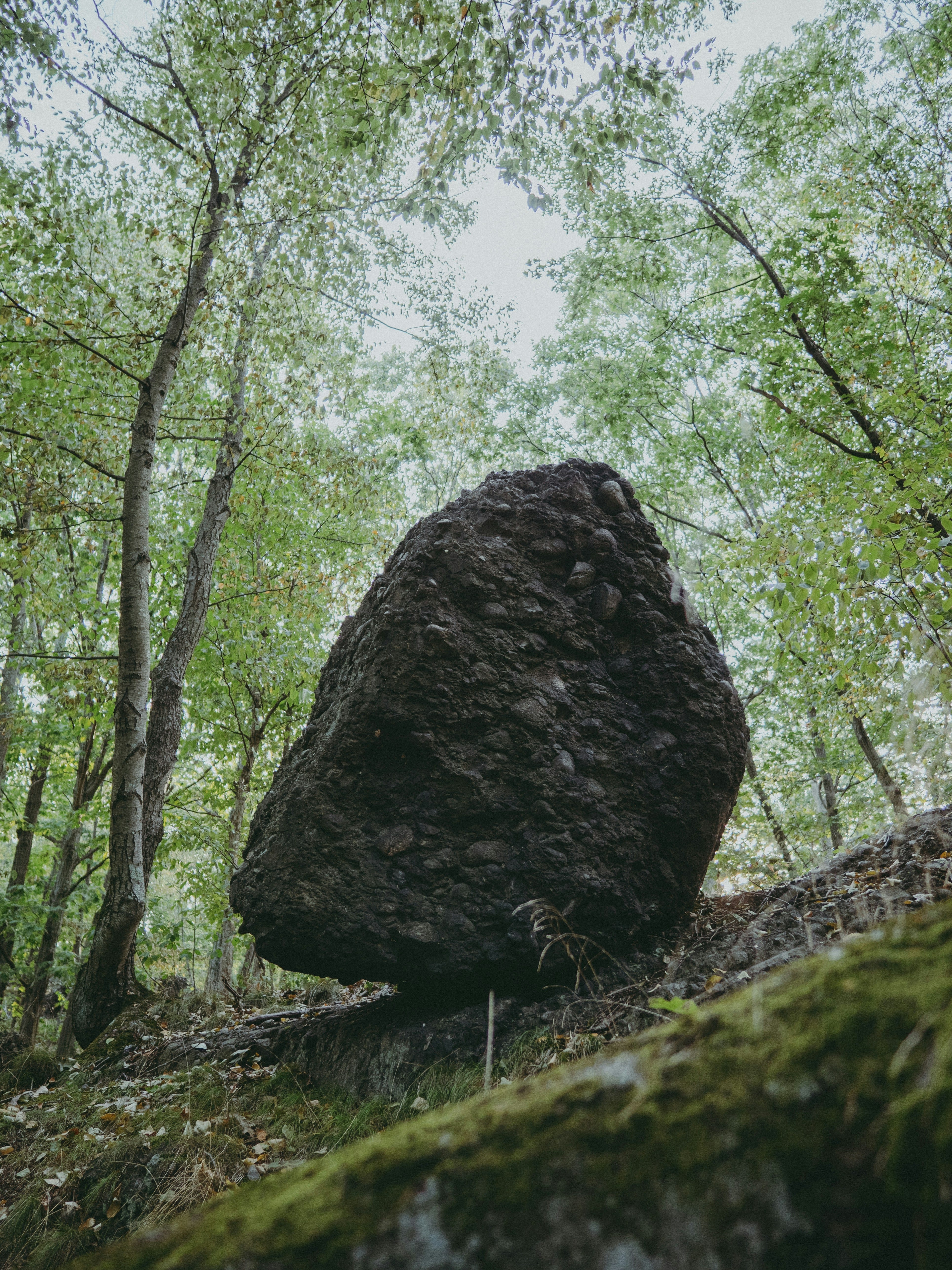
Day 1
The first day wasn’t the worst day. I thought it was, but then, you always do. The boulder fell onto my arm, and it didn’t hurt as much as you would imagine. At least physically. I panicked initially, and wasted a lot of energy trying to move the giant boulder off of me. My mind conjured Camus. He would say that I should imagine myself happy. To sit here and accept the absurdity of life. My body told a different story. Sweat covered me, my lungs burned for air, my muscles weakened. I was losing the strength battle. This was a battle of the acute. My body felt the flood of chemicals. The shivering tremors of adrenaline, the burning in my gut that communicated to my brain that I was in danger, the salty fluids that dripped from my skin into my mouth telling me I still had electrolytes in my body. Yet, my fear bled them from my pores. I took inventory and decided quickly that I was going to ration my water. I also decided that moving the boulder was not going to be possible. Instead, I needed to chip away at it. This required exertion and that required fluids. This was a balancing act of hydrating just enough to maintain my ability to perform a task. And more importantly, hope kept me moving. Surely, someone would stumble upon me and rescue me before I ran out of water. Before I needed to chip the last bit of rock away. In this moment I existed between discipline and optimism. Continue the task. Hope for the best. The night, and the cold crept over me. Whether it was by choice or by force, sleep overtook me.
Day 2
Sleep came in fits. The morning came suddenly. I awoke and thought to myself that panic wasn’t winning my freedom. Instead, my mind needed an anchor. A raven with a worn path. Sunlight that would warm my body in increments. These were real. When your movement is stripped and you are isolated, the mind can do terrible things. Routine became something I needed. These micro moments. I stopped existing in days, weeks, months, years. I existed in thirty-second intervals. In some ways, the second day became the hardest. Because it wasn’t about panic and crisis management. It became about not losing my mind.
Day 3
This is when I began losing my mind. Hope was laughing at me now. No one was coming. Hallucinations came and went. At least, I think that’s what they were. I was dehydrated and starving. My body began a protest that I couldn’t surmount. There was no longer sweat coming from my skin. Instead, it began to tighten over my bones like a stretched, brittle balloon. It occurred to me that I should carve my name and date of death into the rock. Because my bones would be left, and the brittle skin would have ruptured and wilted under the sun. How else would anyone know it was me? This also reminded me about the camera. I began my farewells.
Day 4
Last night I had a dream. I had bent down and scooped up my son. He was on a blanket on the carpet gurgling and smiling. The feeling was tangible. It wasn’t new. It wasn’t some grand, “I’m a father!” moment. It was understood. A continuity. This was a space in which I was already existing. It felt comfortable. I lifted his small body, felt the sag of his weight, the cotton of his pajamas. I smelled his skin. He was real. When I awoke I didn’t feel loss or anger. I didn’t think about fairness. It was the contrast. I knew I needed to get to him. He didn’t exist yet, but I felt this overwhelming desire to get to my son. And that’s when every piece of doubt and confusion left my body.
Day 5
As I lay there I thought about it in detail. I weighed it out. It was going to be awful. It would hurt. But there was something on the other side of it: possibility. Once I had made the decision, it was strange. It didn’t feel like it was happening to me. Not the part I was going to do. But it was clear that the things after the life I needed to go live, that was me. I could feel that. The idea floated to me intrusively. If I used leverage and broke my own arm, I could use my dull multi-tool to do the rest. It was no longer about surviving. It was about deciding that waiting on something that wasn’t going to happen wasn’t something I could stomach. Not when there was still life out there. Maybe I would have a son. Maybe not. But I wouldn’t be under this rock waiting, and turning into human jerky. And so, I knew what I had to do.
Aron Ralston lived this experience. The remarkable thing is not that he cut off his own arm. The remarkable thing is how long he didn’t.
For days he did what all of us do. He hoped. He rationed. He negotiated with reality. He waited for circumstances to become more favorable. He waited for rescue. He waited for the boulder to become something other than a boulder.
Then something shifted.
The canyon did not change. The rock did not move. His arm did not improve. What changed was his relationship to hope.
Hope had been keeping him alive. Then it began keeping him trapped.
There is a point in certain kinds of suffering where endurance stops being a virtue. The thing you are waiting on becomes the thing consuming you. You wake up every morning expecting a different outcome from the same reality. The days accumulate. The mind circles the same questions. Life narrows around the obstacle until the obstacle becomes your identity.
The boulder becomes who you are.
Maybe it is a career that never develops into the thing you were promised. Maybe it is a relationship suspended in permanent ambiguity. Maybe it is a dream that survives only because it never has to face reality. Whatever form it takes, the danger is the same. You become so accustomed to pushing against the rock that you forget there is a world beyond it.
At some point Aron Ralston realized that rescue was no longer the brave choice. The canyon had already given its answer.
The pain on one side of the equation was immediate, violent, and undeniable. The pain on the other side was slower. It arrived disguised as optimism. It called itself perseverance. It asked for one more day. Then another.
The arm was never the point.
The point was that he finally chose possibility over certainty.
Not certainty of survival.
Certainty of the canyon.
Sometimes the healthiest thing a person can do is stop building a life around an obstacle. Stop mistaking endurance for wisdom. Stop confusing hope with progress.
The boulder is not moving.
Cut the arm.
Walk out of the canyon.
Go find out what is waiting beyond the thing that has been keeping you there.